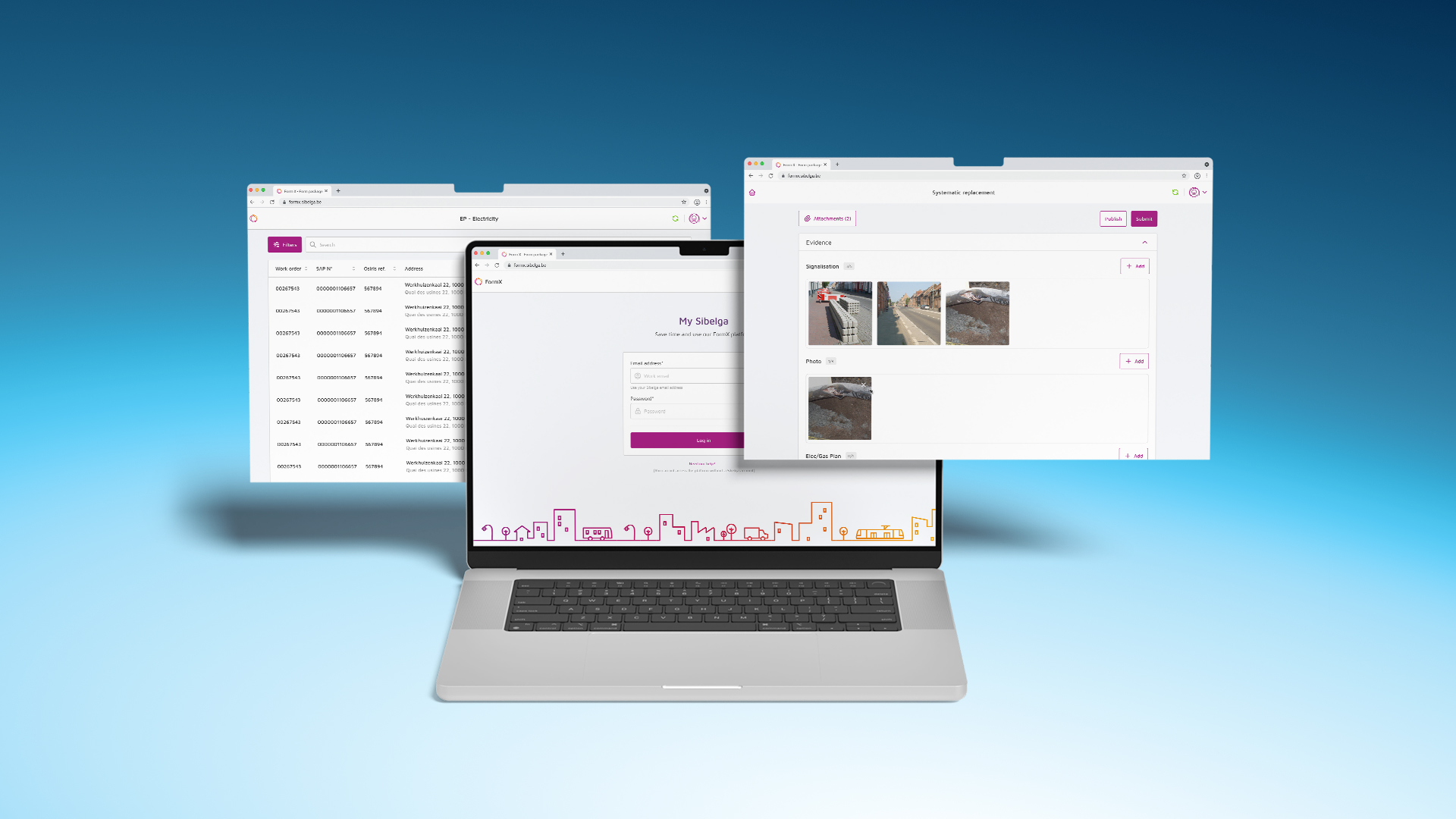
Sibelga, the Brussels energy distribution operator, needed to migrate its field technician application. The existing app, originally a direct digital copy of paper forms, limited usability and efficiency in the field. We delivered a modern solution across iOS and web, supporting seamless workflows and future scalability. The result is a robust platform that drives digital transformation for field operations.
Challenge
Sibelga relied on a legacy app used daily by field technicians and office staff to manage inspections and operational workflows. With Xamarin reaching end of life, a migration was urgent to avoid operational risk.
Key challenges included:
- Inefficient workflows due to paper-like digital forms
- Need for robust offline functionality. The previous app used the same database but struggled with background data syncing
- Strict release timelines with extensive testing cycles
- Limited documentation and knowledge silos impacting delivery speed
The organization needed an efficiency improvement that would support workflow automation while minimizing disruption for field teams.
The solution
We designed and built a modern application ecosystem tailored to real-world field operations.
Key elements:
- Custom-built iOS app in Swift and SwiftUI with a refreshed UX
- Web application in React for back-office users
- Integration with Salesforce and CouchBase via secure APIs
- Offline-first architecture with automatic data synchronization
- Incremental releases aligned with different business domains
The solution provides a scalable architecture that supports both current operations and future enhancements.
Our approach
The project followed a collaborative and UX-driven approach, with close involvement from both business stakeholders and field technicians. Because the application supports critical day-to-day operations, the goal was not only to modernise the technology but also to ensure a smooth transition for the people using it in the field.
How we worked
We used an agile way of working, with three planned releases each year. In every cycle, design, development, and testing were combined. This helped the team test improvements early and adjust them based on real user feedback. Working step by step reduced risks and made sure every new feature met real needs.
We worked as one team, combining different skills. Regular workshops, sprint reviews, and retrospectives helped keep everyone aligned and made it easier to make quick decisions. This close collaboration ensured that technical choices always supported the business goals.
User adoption was very important. While updating the platform, we improved usability but kept familiar workflows. This made it easier for technicians to switch to the new interface without interrupting their daily work.
At the same time, we improved how we worked as a team. Clear design standards, better documentation, and structured backlog management made collaboration smoother and helped the team work faster.
Even with some technical challenges during the move to newer frameworks and a modern architecture, the team adapted quickly and kept delivering at a steady pace.
The outcome
The result was a structured and collaborative delivery process that enabled Sibelga to modernise its application landscape while keeping the needs of its field teams at the centre. By combining a user-focused design approach with a modern, scalable architecture, the project delivered both immediate operational improvements and a strong foundation for future innovation.
The migration quickly translated into tangible business impact, while the new platform provides the flexibility and efficiency needed to support long-term growth and evolving operational requirements.
Results
- Successful first release delivered on time, despite technical hurdles during the migration
- Very limited number of bugs reported post-release, demonstrating the stability of the new platform
- Positive feedback from field technicians, particularly on the modern interface and improved usability
- Stronger internal capabilities, with developers gaining deep domain knowledge and evolving into true product experts
- Increased confidence across teams, creating strong momentum and anticipation for upcoming releases
.svg)
.svg)